
Joliet Concrete Contractors logoJoliet Concrete Contractors
Sidewalks & Walkways · Joliet

Sidewalks & Walkways in Joliet, IL, Poured By Our Local Crew

We pour flat, even walkways that hold their line through Joliet winters, and we get you on the schedule with one call.

Free · 24-hour response

Free Sidewalks & Walkways quote.

Response under 24 hours. No spam. Contact info is used only to send the quote.

What we install

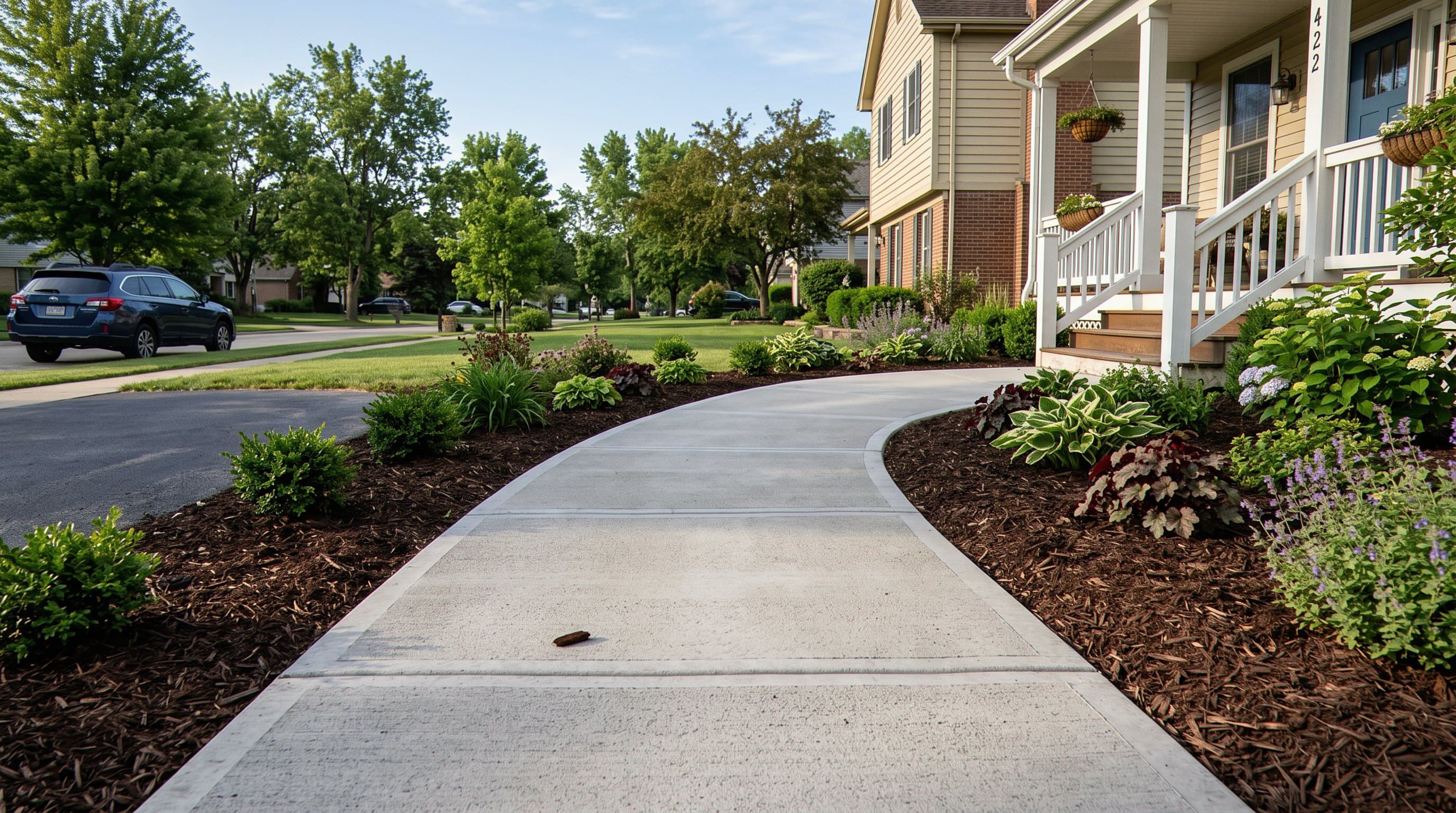
Walkways That Stay Flat And Safe Year Round

Most sidewalks in Joliet do not wear out from the top. They fail from what happens under them. Water seeps into the joints and the soil below. When a hard Will County winter freezes that water, the ground swells and shoves one slab higher than the next. Tree roots push up from the side. By spring you have a lip that catches a toe, a low spot that holds a puddle, and salt damage flaking the surface. We pour new walkways on a base built to drain and hold steady, so the panels stay even underfoot. When only a section has lifted, our crew also handles concrete repair and leveling.

Our process is plain, and we walk you through each step. First we remove the old walk and clear the path. Then we grade and compact the base, since a sidewalk is only as flat as the ground beneath it. We set the forms to a gentle, even slope that sheds water away from the house. We pour at the right thickness for foot traffic, tool the edges, and cut control joints at the spacing that keeps cracks tight and straight. Then we broom the surface so it grips when the walk is wet or iced.

  • A compacted base that drains well and resists winter heaving.
  • Control joints cut at proper spacing to steer where cracks form.
  • A gentle, even slope that sends water off the walk, not toward the door.
  • A broom finish that keeps its grip in rain, snow, and ice.
  • Old walkway torn out and hauled off, with the site left clean.
A walkway is base first and concrete second, and we never skimp on the part you cannot see.

We live and work here. We know what a Joliet walkway takes across a full year, from January road salt to the heat of an open August. We have poured through the freeze and thaw swings that lift slabs all over Will County. We know how the heavy clay soil around here moves, and we prep the base to match it. When you call, you reach our crew, not a call center. We answer the phone, give you a straight timeline, and show up when we say we will.

Tell us where your walk sits now and where you want it to go. We will give you a clear plan and a spot on the schedule. One call gets it moving.

Materials

What Goes Into A Walkway That Lasts

A sidewalk is a system, not just a strip of concrete. The base does most of the quiet work. We dig to the right depth, lay and compact a gravel base, and make sure water has a way to drain off. On top of that we pour concrete mixed for our climate, strong enough to take foot traffic through hot summers and cold winters. Steel mesh or fiber ties the panels together so a small crack stays small.

The finish and the slope are real choices, not afterthoughts. A broom finish gives grip when the walk is wet or icy, which matters on a Joliet January morning. We set a slight cross slope so rain and melt run off instead of pooling and freezing into a slick patch. We can add a sealer that shrugs off road salt and slows the freeze and thaw wear. Every mix, slope, and finish we suggest fits the way you actually use the path.

  • Compacted gravel base sized for real drainage
  • Slab thickness matched to foot traffic
  • Steel mesh or fiber holding the panels together
  • Broom finish that grips when wet or icy
What about the alternatives?

Your Walkway Options, Compared

There is more than one way to fix a worn or lifted walk, so here is how the common choices stack up for a Joliet home.

New poured concrete walkway

Strongest long term choice for our climate. It holds a flat, even line through road salt and hard freeze swings when the base is done right, and it carries foot traffic for decades.

Recommended

Grinding down a raised lip

A quick way to kill a trip hazard on one panel. It buys time, but it leaves the surface thinner and does nothing about the heaving that lifted the slab.

Acceptable

Mudjacking or slab lifting

Works well when a sound panel has simply settled. It raises the slab back to level for less than a full pour, though a badly cracked walk still needs replacing.

Acceptable

Paver walkway

Looks sharp and lets water pass between the joints. It can settle and shift over time in our clay soil, and weeds like to find the gaps.

Acceptable

Patching cracks year after year

A stopgap when money is tight. The base problem stays put, so fresh cracks and new lips keep opening a season or two later.

Skip

Pouring over a failing base

Skipping the base prep to save time. The new walk inherits every old weak spot below and lifts or cracks far sooner than it should.

Skip
How it goes

From quote to walk-on, fast.

STEP 01

Free Quote

Submit a few photos or book a free 15-minute on-site visit. The result: a fixed written quote, not an estimate range.

STEP 02

Prep & Forming

Excavate and grade, compact the gravel base, set forms to final height, and place reinforcement matched to the load.

STEP 03

Pour & Finish

Pour, screed, and float the slab, then apply the finish — broom, trowel, or stamp — and cut control joints.

STEP 04

Cure & Use

Walk on it in a day or two. Vehicle use after the cure window quoted for your pour.

Before you book

Straight Answers Before You Commit

A new walkway is a real project, so most owners ask the same handful of questions first. Here is where we stand.

Light foot traffic is usually fine in a day or so. We ask you to keep bikes, heavy carts, and pets off for a few more days, because that early stretch is when the concrete gains real strength. We give you the exact window for your pour before we leave the site.
All concrete moves, and control joints are how we manage it. We cut joints at set spacing so the walk cracks along clean lines you barely notice, instead of across the open surface. Solid base prep and the right thickness keep those cracks tight.
Often, yes. If the base is still sound and a slab has only settled, lifting or replacing that section can be the smart call. If the heaving is widespread or the concrete is spalling, a fresh pour is the better value. We look and tell you straight.
Once we see the walk and agree on a plan, we give you the next open date on our schedule. We keep you posted if weather pushes a pour, since a hard rain or a freeze can move a date. We do not leave you guessing.
Yes. Public walks along the street often follow city rules on width, slope, and thickness. We pour to those standards and can walk you through what Joliet expects before we start, so the finished walk passes without a fuss.
That is the point of the slope. We set a slight cross grade so rain and melt run off the surface instead of pooling and freezing. The broom finish adds grip, and a salt resistant sealer slows the wear that a Joliet winter brings.
Aftercare

Keeping Your New Walkway Solid

A concrete walkway asks for very little, but a few small habits add years to it. The biggest one is sealing. A fresh seal every couple of seasons keeps water and road salt from working into the surface. Clear snow with a plastic shovel, and go easy on metal blades that gouge the finish. Watch the joints and edges, and call us early if a small crack or lip starts to open.

  • Reseal every couple of seasons to block water and salt.
  • Shovel snow with a plastic edge, not a sharp metal blade.
  • Rinse off road salt in late winter before it soaks in.
  • Keep water draining off the walk, not pooling on the surface.
  • Fill any small crack early before winter can widen it out.
  • Trim tree roots near the walk before they lift a panel.
FAQ

Sidewalk And Walkway Questions From Joliet Owners

Ready when you are

Ready to get started in Joliet?

Send a few photos or book a quick on-site walk-through. A fixed written quote within one business day.

Call NowFree Quote